
Modern manufacturing depends on precision, productivity, and consistent product quality. Industries involved in automotive production, engineering, machinery, and component manufacturing require specialised tools to meet demanding production standards. Choosing the right tooling solution can make a significant difference in machining accuracy, production speed, and finished component quality.
Among the important technologies used in industrial manufacturing are power skiving and thread rolling. Both processes serve different purposes, but they contribute to efficient production by helping manufacturers achieve accurate results with suitable tooling.
Understanding Power Skiving in Gear Manufacturing
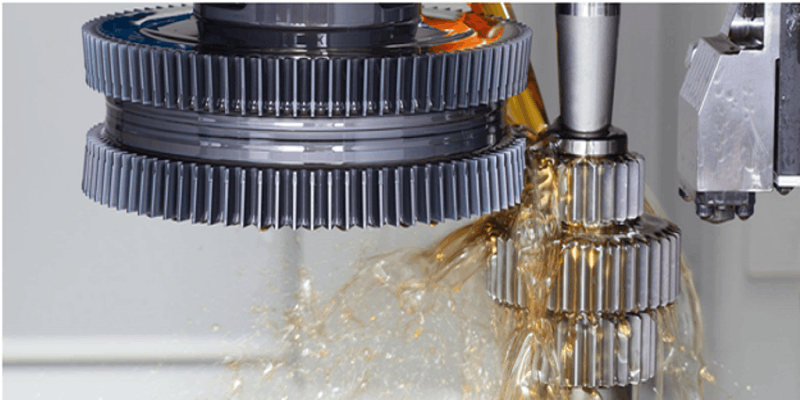
Gear manufacturing has evolved with the introduction of advanced machining processes. Power skiving is one such technology that allows manufacturers to produce internal and external gear profiles with high precision.
The process involves a coordinated movement between the cutting tool and the workpiece. Both rotate in a synchronised manner while the cutter gradually removes material to form the required gear teeth.
Compared with some traditional gear cutting methods, power skiving can offer advantages in production efficiency and machining flexibility. It is particularly useful for applications involving internal gears, where accessibility and machining requirements can make conventional processes more challenging.
High quality power skiving cutters are important for achieving accurate tooth profiles and maintaining consistent machining performance. Tool selection should take into account the gear specifications, workpiece material, machine capabilities, and required production quality.
Why Thread Rolling Is Important in Industrial Production
Thread manufacturing is another essential operation across many industries. Threaded components are widely used in automotive assemblies, industrial equipment, construction machinery, and engineering applications.
Thread rolling is a cold forming process in which material is displaced under pressure to create threads. Unlike conventional cutting methods, it does not remove material to form the thread profile.
This process can provide several benefits, including improved surface finish, consistent thread dimensions, and enhanced strength characteristics when compared with an equivalent cut thread, depending on the material and application.
The Role of Flat Thread Rolling Dies
Flat dies are commonly used in thread rolling operations for producing external threads on cylindrical components. The workpiece moves between two dies, one stationary and the other reciprocating, allowing the required thread profile to form through controlled pressure.
The quality of the finished thread depends on die design, material properties, machine settings, and correct alignment.
Well designedflat thread rolling dies support repeatable production and help manufacturers maintain consistency across large batches. They are particularly suitable for applications where production efficiency and uniform thread quality are important.
Factors to Consider When Selecting Industrial Tooling
Selecting suitable tools requires an understanding of the manufacturing process and the requirements of the finished component. A few important factors should be evaluated before making a decision.
Application Requirements: Understand whether the operation involves gear machining, thread formation, or another specialised manufacturing process.
Material Compatibility: The workpiece material influences tool selection, machining conditions, and expected performance.
Dimensional Accuracy: Tool specifications should match the required component dimensions and production tolerances.
Machine Compatibility: Ensure that the selected tooling is suitable for the available machine and its operating specifications.
Production Volume: Consider whether the tooling can support the required production quantity while maintaining consistent quality.
Maintenance and Tool Life: Regular inspection and proper operating conditions help maintain performance and reduce unnecessary production interruptions.
Improving Productivity Through Better Tool Selection
Manufacturing efficiency depends on several connected factors. The right tooling, suitable machine settings, skilled operation, and regular maintenance all contribute to dependable results.
For gear production, an appropriately selected skiving tool can support accurate machining and efficient processing. Similarly, selecting the right thread forming solution helps manufacturers maintain uniformity across repeated operations.
Manufacturers should also pay attention to cutting parameters, lubrication requirements, workpiece preparation, and tool condition. These practices help control production costs while maintaining the required quality standards.
Finding Suitable Tooling Solutions for Industrial Applications
Choosing a tooling supplier is an important decision for manufacturers looking to maintain reliable production. Buyers should consider product specifications, technical information, manufacturing expertise, and the availability of application guidance.
S.S. Tools provides an online platform where industrial buyers can explore its tooling range and learn more about available solutions. Visiting the official website can help customers review product information and identify suitable options for their manufacturing requirements.
Understanding the application before selecting a product makes it easier to choose tooling that meets operational and quality expectations.
Final Thoughts
Advanced manufacturing requires tools that support precision, consistency, and efficient production. Power skiving and thread rolling are valuable processes for different industrial applications, helping manufacturers produce accurate gears and threaded components.
By understanding their working principles and selecting suitable tooling, businesses can improve production practices and maintain dependable component quality. A thoughtful approach to tool selection remains an important part of successful industrial manufacturing.